


It’s not all about competition: the importance of informal sport and play.


I first met Tiago a good many years ago when I was working with Birmingham City Council, leading a European Union Urban Action planning programme for the city (Urbact) as part of a wider programme called Vital Cities. I was lucky then to visit Loulé, Portugal and was impressed by the policy and planning approach being taken. We have stayed in contact, and I continue to be stunned by Tiago’s drive and commitment to his and our shared passion.
In this article, Tiago reflects on the importance of informal sport. He will be taking this message later in November to the European Parliament later in November.
At Intelligent Health, we believe that the most powerful movements for wellbeing begin in the simplest of places — a street corner, a forgotten patch of nature, a well-trodden path. When communities are given space and permission to move freely — to walk, cycle, play, or simply gather — health flourishes and social connection grows. This is the same spirit that drives Beat the Street and our wider mission: to create resilience and improve health by connecting people to each other, their communities and their environment. Tiago Guadalupe’s article on informal sport beautifully captures this principle — that when we open up our shared spaces to everyday movement, we don’t just promote sport; we nurture healthier, more connected, and more resilient communities. Steve Rose – Head of Insight, Intelligent Health
Informal Sport as a Driver of Urban Development
Author: Tiago Guadalupe, Coordinator of the “European and Sports Projects” Department of the Municipality of Loulé (Portugal), author of the books “Liderator – Excellence in Sport”, “Maniche 18”, “SER Entrenador – Joel Rocha’s Conception in Futsal”, “To Be a Coach” and “Organize to Win”, and columnist for A Bola newspaper.
There is another side of sport, a more discreet one, that rarely appears as a priority when we talk about local development. Even less so when it comes to informal sport, which arises spontaneously, in streets, squares, parks, gardens, beaches, or improvised spaces, without clubs, membership fees, or official competitions. Yet it is precisely within this free and accessible universe that we find one of the most powerful engines of social cohesion, inclusion, and community dynamism.
Informal sport must occupy an increasingly relevant place in the strategy of present and future cities. That is my conviction. Although less visible than high-performance sport, informal sport is vital for public health, social cohesion, the environment, and even the local economy.
Municipalities today play a decisive role in promoting sport. They are the main financiers of associations and sports practice, with specific responsibilities resulting from administrative decentralisation. This is not only a matter of tradition – it is a matter of strategy. Municipalities are the ones that create the conditions for sport to be truly accessible to all.
When people think of sport, the first image is usually that of formal competition – clubs, championships, national teams, elite athletes. But there is another side, less visible yet equally powerful: informal sport, practised in neighbourhood sports grounds, parks, streets, or beaches. A “no official jersey” kind of sport, far from the spotlight, yet capable of generating social ties and unique opportunities.
“Informal sport is vital for public health, social cohesion, the environment, and even the local economy”
Informal sport is inclusive by nature. It requires no fees or registration. It only needs a safe and appealing space and the will to participate. It does not distinguish age, gender, origin, or economic condition: everyone fits in. That is where its transformative power lies.
In local contexts, informal sport builds community. It offers young people opportunities to meet, share rules, and learn how to manage conflicts. It is a space for intergenerational encounters, where grandparents, parents, and grandchildren share memories and traditions. In cities, it acts as a point of integration for newcomers.
The impact is not only social – it is also economic. Informal sports and leisure activities bring life to public spaces, attract visitors, give visibility to local businesses, and generate movement in cafés, shops, restaurants, and accommodation. In most cases, major investments are not required – only organisation, creativity, and political will.
Sedentarism is one of the greatest problems of modern society. Informal sport combats it in an accessible and enjoyable way, helping to reduce future healthcare costs. It is, therefore, also a preventive public policy measure. From an environmental point of view, investing in active mobility reduces the use of motorised transport, lowers pollution, decreases the carbon footprint, and improves quality of life.
Bike paths, pump tracks, street workout parks, outdoor gyms, senior circuits, and multipurpose spaces are investments that project a greener and healthier future.
“It does not distinguish age, gender, origin, or economic condition: everyone fits in”
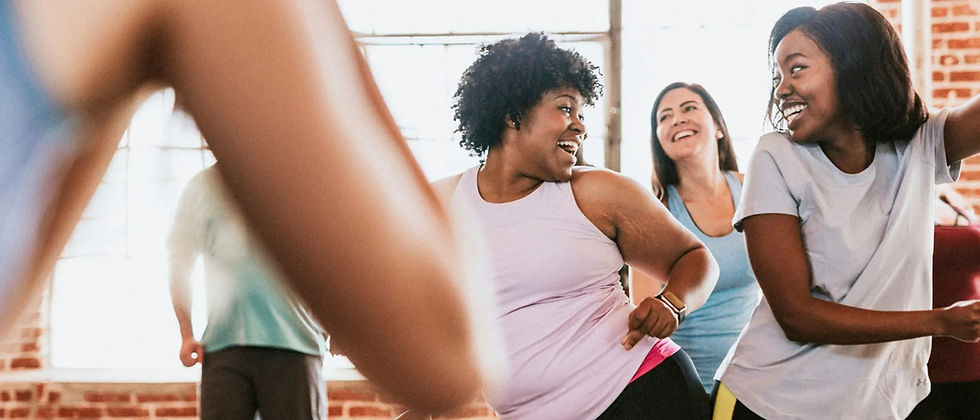
The Active Summer (Verão Ativo) project, promoted by the Municipality of Loulé (Portugal) within the framework of the European One Health 4 Cities initiative, is an exemplary case. For about ten years, it has promoted workshops on healthy eating, climate action awareness, walking groups, Zumba, yoga, pilates, senior gymnastics, dance, capoeira, and many other activities. The program not only encourages physical activity but also revitalises public spaces – squares, gardens, and seafront promenades in Loulé, Almancil, and Quarteira – turning them into hubs of social interaction, health, and citizenship.
Across Europe, similar initiatives are multiplying. Birmingham closes streets to traffic once a month for yoga, mountain biking, or street games. Copenhagen promotes ‘Open Streets’, opening roads to pedestrians and cyclists on weekends.
Madrid transforms central arteries into leisure and sports spaces on Sundays. Berlin installs temporary gyms in parks during the summer. Paris organises 3×3 football, handball, and street basketball tournaments in neighbourhoods.
Rotterdam implements the Play Streets project, temporarily closing streets for children’s play and activities. Barcelona, with its ‘Superblocks’, frees entire blocks for skating, dance, and outdoor fitness. Vienna hosts the Street Sports Festival, combining music, workshops, and urban competitions. These examples show how informal sport can turn any city into a vibrant space of movement, interaction, and creativity.
Informal sport is also a form of non-formal education. It teaches values such as cooperation, solidarity, respect for rules, and respect for difference. For many children, the street or the park is their first ‘sports school’ – and, at the same time, their first school of citizenship. Furthermore, it can be linked to cultural and tourism events, creating unique moments of celebration that strengthen local identity and territorial attractiveness.
“Investing in informal sport means investing in a healthier, more cohesive, and more humane society”
Analysing sport within the municipal context highlights its importance in the budgetary dynamics of public policy. Municipal intervention should be based on five pillars:
generalising access to sport
creating and improving infrastructure
enhancing activity quality
cooperating with civil society
modernising sports management.
Sport does not live only through major clubs and championships. It lives, above all, through people – through their will to share movement, joy, and connection. It is in informal physical activity – the improvised neighbourhood game, the group run or walk, the yoga session in a park, or the beach volleyball match – that we often find the true sporting spirit.
In the upcoming municipal elections, candidates must be aware of this reality: investing in informal sport means investing in a healthier, more cohesive, and more humane society. It is not an expense – it is an investment with a guaranteed return.
It is up to municipalities to take the lead and integrate informal sport as a policy priority, creating conditions for everyone to access spaces for physical activity and social interaction. By doing so, they will not only be investing in sport but also generating economic benefits, strengthening social cohesion, and improving collective wellbeing.
Informal sport is, ultimately, a powerful instrument of local development and deserves to be treated as such.


Comments